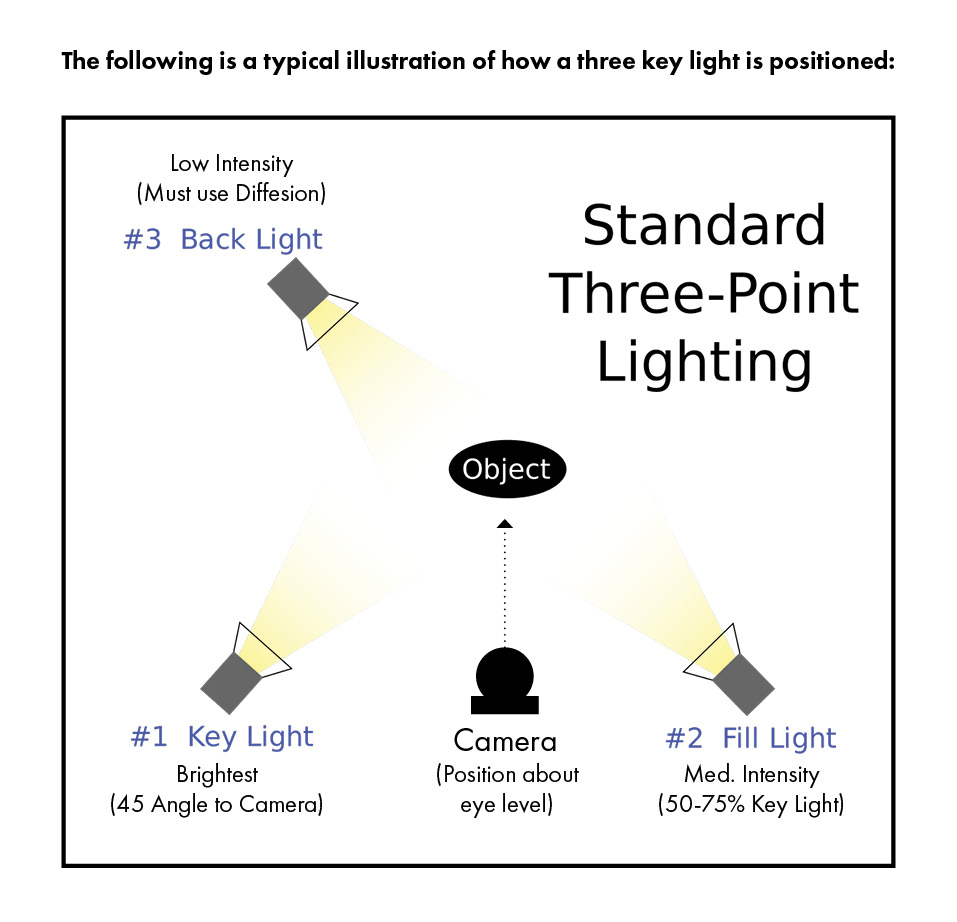
To produce a good-looking video, how you position your lighting is critical. The standard basic lighting scenario has three different types of lights.
- Key light
- Fill light
- Backlight
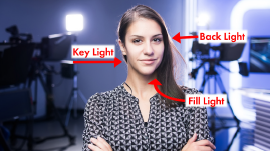
Working together, this combination of lighting essentials wraps your subject in light.
The Key Light is placed about 45 degrees to the subject, either left or right, usually above and aimed down between 30 and 45 degrees. It is the dominant (key) light. Position this light as if it were the only light you had. The key light will create defining shadows on the face which would be lost if the light were on a similar axis to the camera, but you’ll notice that in a room with no other lighting, it will create deep, dark shadows. Toning down those shadows is the job of the fill light.
The fill light is usually two or three stops dimmer than the key light and placed further away from the background. The fill light is a counter light to the key light. Its placement will depend on environmental factors, such as the shadows the light creates in certain positions. The shadows the fill light creates can change the mood of your entire video production.
The fill light can be the same size as the key light in wattage and bulb size, but you might place it further away than the key. Watch as the fill light starts to change the shadows; though the lighting is not nearly as harsh, the key and fill lights need to work together to create a two-dimensional view. The job of the third and final light, the back light, is to create a sense of distance between the subject and the background, giving an illusion of a third dimension on the screen.
The backlight, sometimes called a rim or shoulder light, is aimed at the subject’s back, and, like the key light, it is usually placed at a 45-degree angle and shines down upon the subject. This creates a bright rim around part of the subject, creating an outline that then appears to separate the shoulders from the background. The backlight should be at least as bright as the key, often brighter. The backlight is what pulls everything together by adding a highlight around the talent and providing yet another lighting dimension that defines the talent in the overall scene.
There are a variety of devices that will fit over your light and are used to direct, diffuse, or focus the light. Light reflectors, diffusers, barn doors, and snoots are very useful tools to help accent your lighting. For more information about these additional tools, you can research the Internet.